How Does Instantaneous Hot Water Work? (2026 Guide)
Instantaneous hot water systems, often called “tankless” or “continuous flow” systems, are rapidly becoming the standard for modern Australian homes. In 2026, these units are no longer just about saving space; they are high-tech solutions designed for maximum energy efficiency and smart home connectivity.
But how exactly do they provide endless hot water without a tank? Let’s dive into the mechanics.
The Core Principle of Instant Hot Water: Heating on Demand
Unlike traditional storage heaters that keep a large tank of water hot 24/7 (wasting energy through “standby heat loss”), an instantaneous system only heats water when you turn on a tap. According to energy.gov.au, water heating is the second largest segment of household energy use, making the efficiency of on-demand heating a significant priority for cost-conscious Australians.
When you open a hot water outlet, a sensor detects the water flow and immediately triggers the heating process. The water travels through a coiled pipe known as a heat exchanger, which absorbs heat from either a gas burner or an electric element and transfers it instantly to the water.
Types of Instantaneous Hot Water Systems
While the goal is the same, the method of heating varies based on your home’s energy source.
1. Electric Instantaneous Systems
Modern electric units are incredibly compact and often used in apartments or as “point-of-use” heaters for specific bathrooms. These systems use high-powered copper or nickel-alloy elements to create friction and heat as water passes through, warming it to your precise temperature setting.
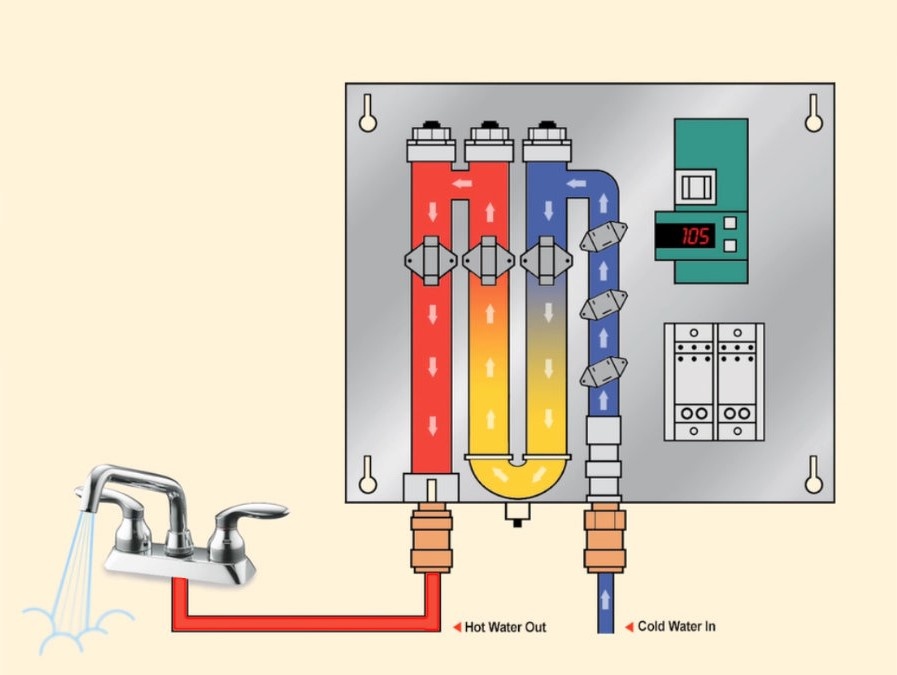
By 2026, standard models have evolved to include advanced inverter technology. This allows the unit to modulate power usage dynamically, ensuring the system only draws the exact amount of electricity needed to hit the target temperature. This eliminates the “cold spikes” previously felt if a second tap was turned on elsewhere in the home.
2. Gas Instantaneous Systems (Natural Gas or LPG)
Gas units remain a powerhouse for larger families due to their high flow rates. When the flow sensor is triggered, a gas burner ignites to heat the exchanger as the water spirals through.
With many Australian states transitioning toward “all-electric” homes, the gas landscape has changed. Modern high-efficiency gas models are now often designed with hydrogen-ready components or installed in hybrid configurations to meet current emissions standards while still providing the high-volume performance gas is known for.
.jpg)
Pros & Cons of Instant Hot Water Systems
Pros:
- Endless Supply: Hot water as long as the tap is open.
- Lower Bills: Only pay for the energy you actually use.
- Longer Lifespan: Typically last 20+ years (storage tanks often fail around 10-12 years).
- Space Saving: Mounts easily on external walls.
Cons:
- Initial Cost: Higher purchase and installation price than basic storage tanks.
- Minimum Flow Rate: Some “low-flow” eco-taps may not trigger the heater if the flow is too low.
- Retrofitting: Switching from electric storage to gas instant may require gas line upgrades.
- “Cold Water Sandwich”: Brief cold bursts can occur if the tap is turned off and on quickly (though rare in 2026 models).
Why Are Aussies Switching in 2026?
The current energy landscape in Australia has made instantaneous hot water systems more attractive than ever:
- Endless Hot Water: Perfect for back-to-back showers. You’ll never run out of hot water because the system doesn’t rely on a finite tank.
- Smart Home Integration: Many models come with Wi-Fi connectivity and mobile apps. You can set your shower temperature to the exact degree from your phone or monitor your water usage in real-time.
- Predictive Maintenance: AI-powered sensors can now alert you (or your plumber) if they detect mineral build-up or a drop in efficiency before a breakdown actually occurs.
- Extreme Space Efficiency: These units are roughly the size of a small suitcase and are usually wall-mounted, freeing up valuable floor space in your garage or backyard.
Things to Consider Before You Upgrade
Before making the switch, keep these factors in mind:
- Size & Flow Rate: You need a unit rated for your household size. A unit that serves a 1-bathroom apartment won’t keep up with a 4-bedroom family home.
- Energy Source: If you are in a region moving away from gas (like parts of Victoria), an electric instantaneous system or a heat pump may be a more future-proof investment.
- Water Pressure: Ensure your home has adequate pressure to trigger the system’s flow sensors.
- Professional Installation: These systems require precise calibration of gas pressure or electrical load. Always use a licensed plumber to ensure your warranty remains valid.
Thinking of switching to instant hot water?
If you’re ready to enjoy endless hot water and lower energy bills, speak to the experts at Fallon Solutions. Our licensed plumbing team can assess your home’s requirements and recommend the perfect system for your lifestyle.
Call us on 1300 054 488 or book a hot water assessment with Fallon Solutions today!
Need an Air Conditioning specialist?
We can be there today!
Our local tradies service Greater Brisbane, Gold Coast & Sunshine Coast.

Trusted by over 8,500+ reviewers on Google.
Rated 4.6 stars from more than 8,500 reviews in Brisbane